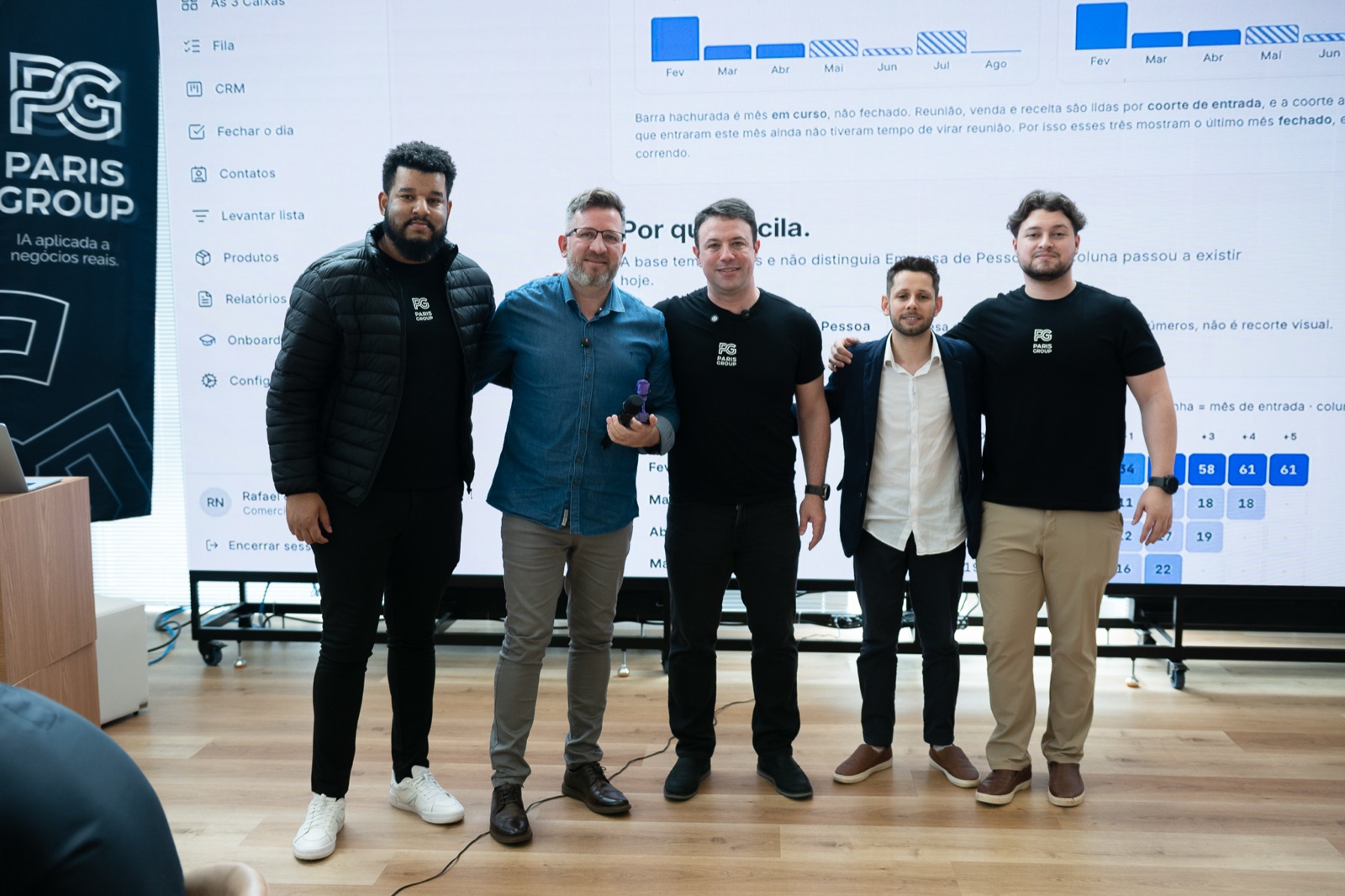
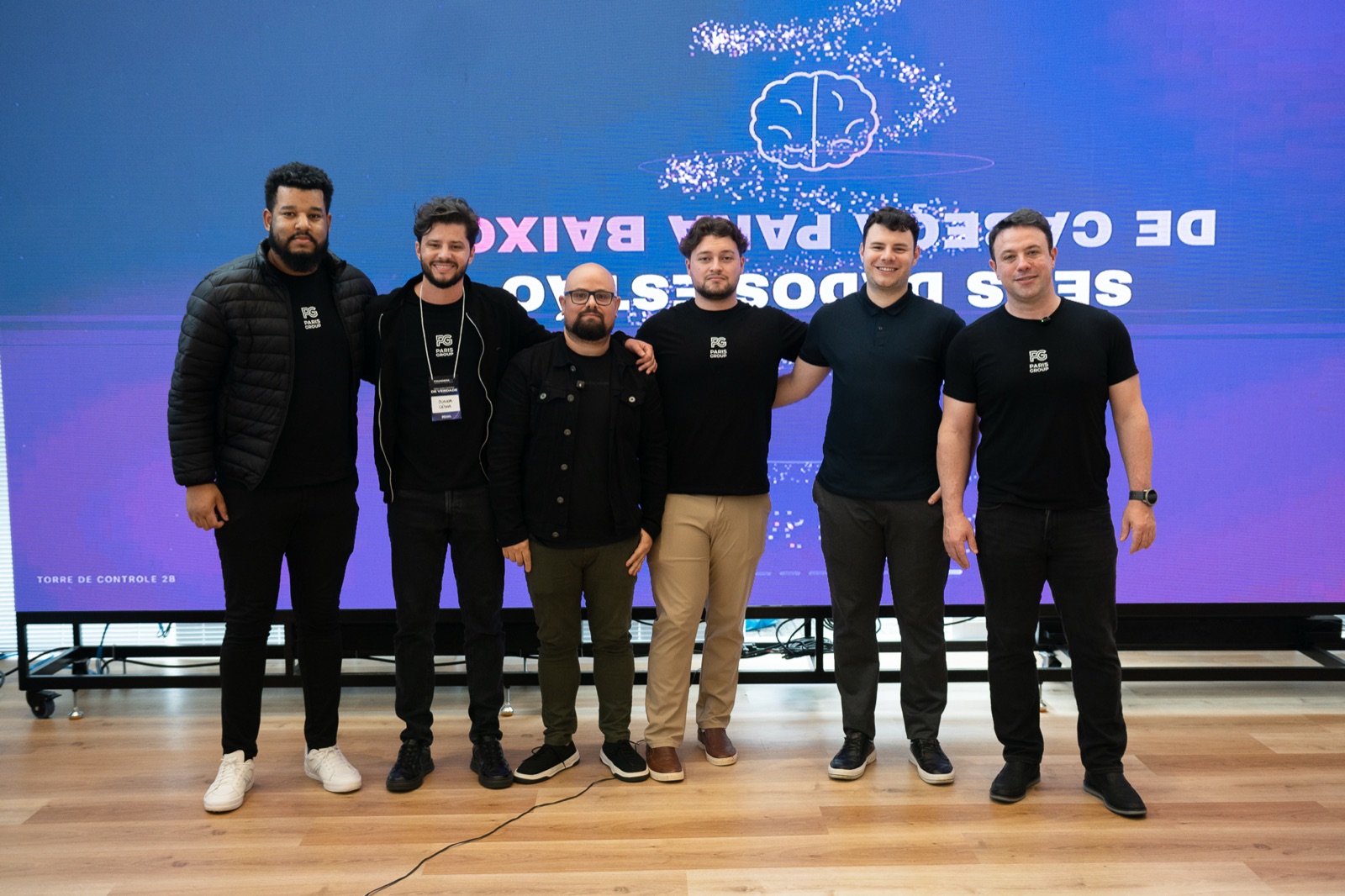
I spent three days in Chapecó, Brazil, as a mentor at Founders AI, Paris Group's AI immersion. I walked nine founders from a real bottleneck to a working product, and presented ConectaAI to the room — including a live phone call answered by an AI agent.
This is what I took from it. It isn't an event recap: it's what makes an immersion end with a product live instead of ending with a notebook full of notes.
The format is what holds the delivery
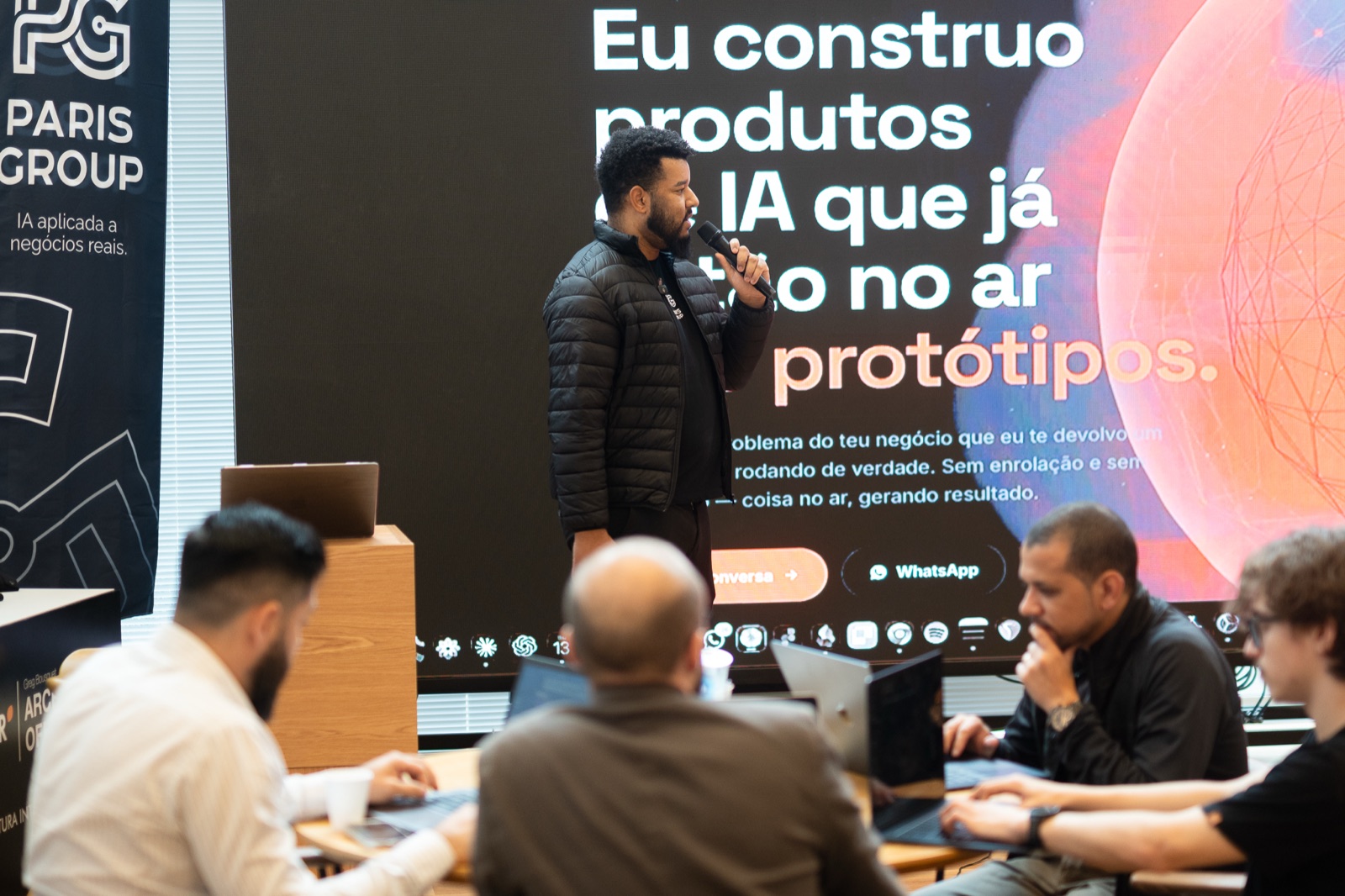
Paris Group calls it an Operator Sprint: short block of content, long block of execution, repeating for three days. It sounds like a scheduling detail. It isn't — it's the decision that defines the outcome.
The typical immersion inverts that ratio. It spends the whole day explaining what RAG is, what an agent is, what fine-tuning is, and saves the last hour for "putting it into practice". The participant leaves with vocabulary and no product. Two weeks later, the vocabulary is gone too.
When most of the hours go to building, three things change. The participant hits the real problem while still in the room, with a mentor beside them — and the real problem is always different from the imagined one. Questions surface at the moment they matter, not in a Q&A at the end. And scope corrects itself: nobody defends an oversized idea when they have to show it working on Thursday.
What blocks people isn't the technology
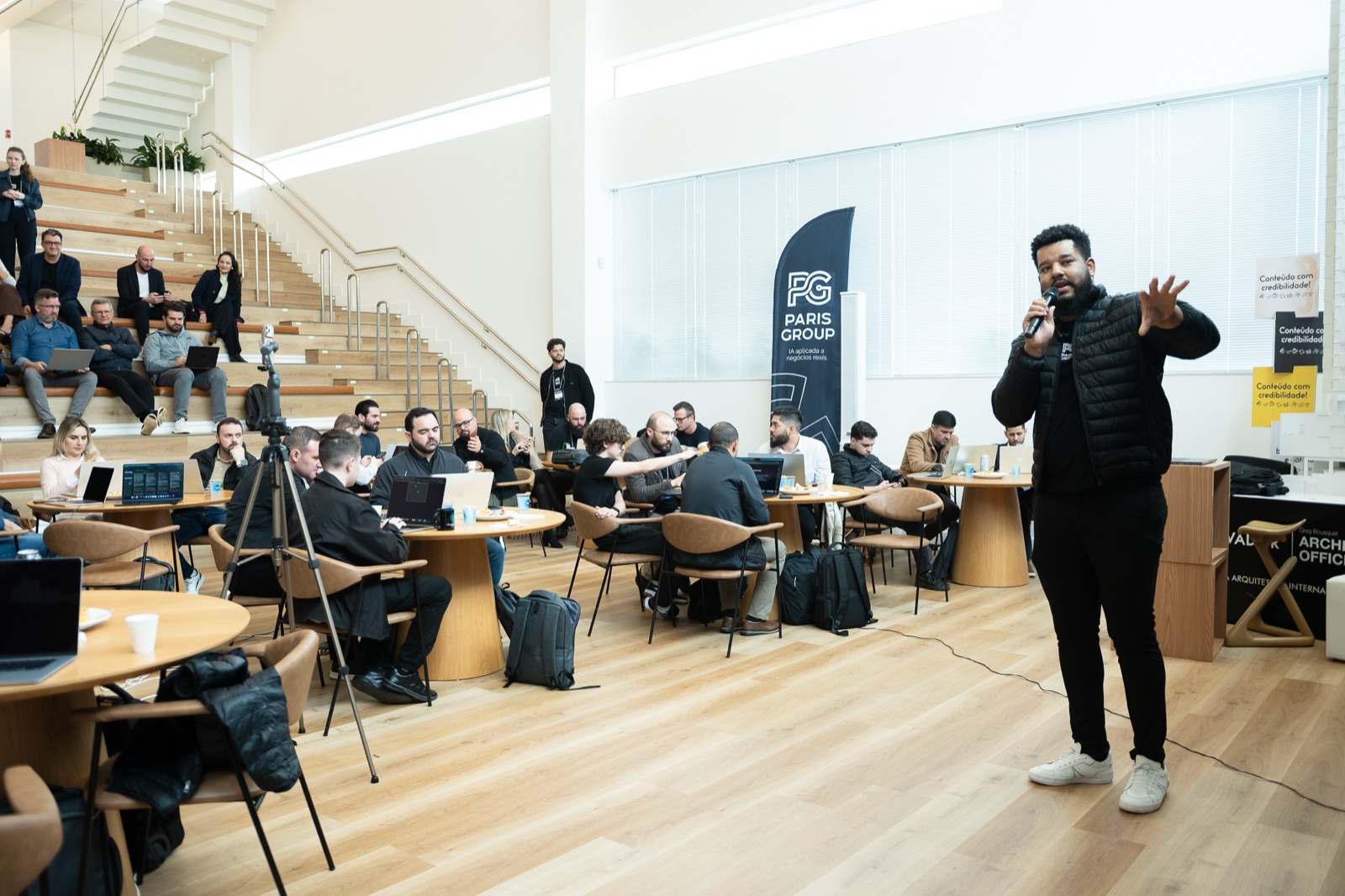
I mentored nine founders over those three days. Not one of them got stuck on a model, a prompt or a tool. All of them got stuck, at some point, in the same place: scope that was too big.
The request almost always arrives like this: "I want to put AI in customer support." That's not a project, it's a category. You can't ship it, you can't test it, and above all you can't tell whether it worked.
In practice, a mentor's job is almost entirely here — turning a category into a cut:
- "AI in support" becomes "answer the five questions that make up 70% of WhatsApp volume"
- "automate sales" becomes "qualify the lead and book it on the right calendar, with no human in between"
- "use AI on our data" becomes "answer, in plain language, the three questions the owner asks every Monday"
Notice the pattern: a good cut has a number, has an owner, and has an obvious way to tell whether it worked. Once scope is that size, three days is plenty. Before that, three months isn't enough.
All nine shipped. Not because the tooling was magic, but because the problem was the right size.
The demo: a phone call answered by AI, live
Later I presented ConectaAI — the AI call center we built for internet service providers — to about fifty people.
I could have shown an architecture slide. I chose to make a call instead.
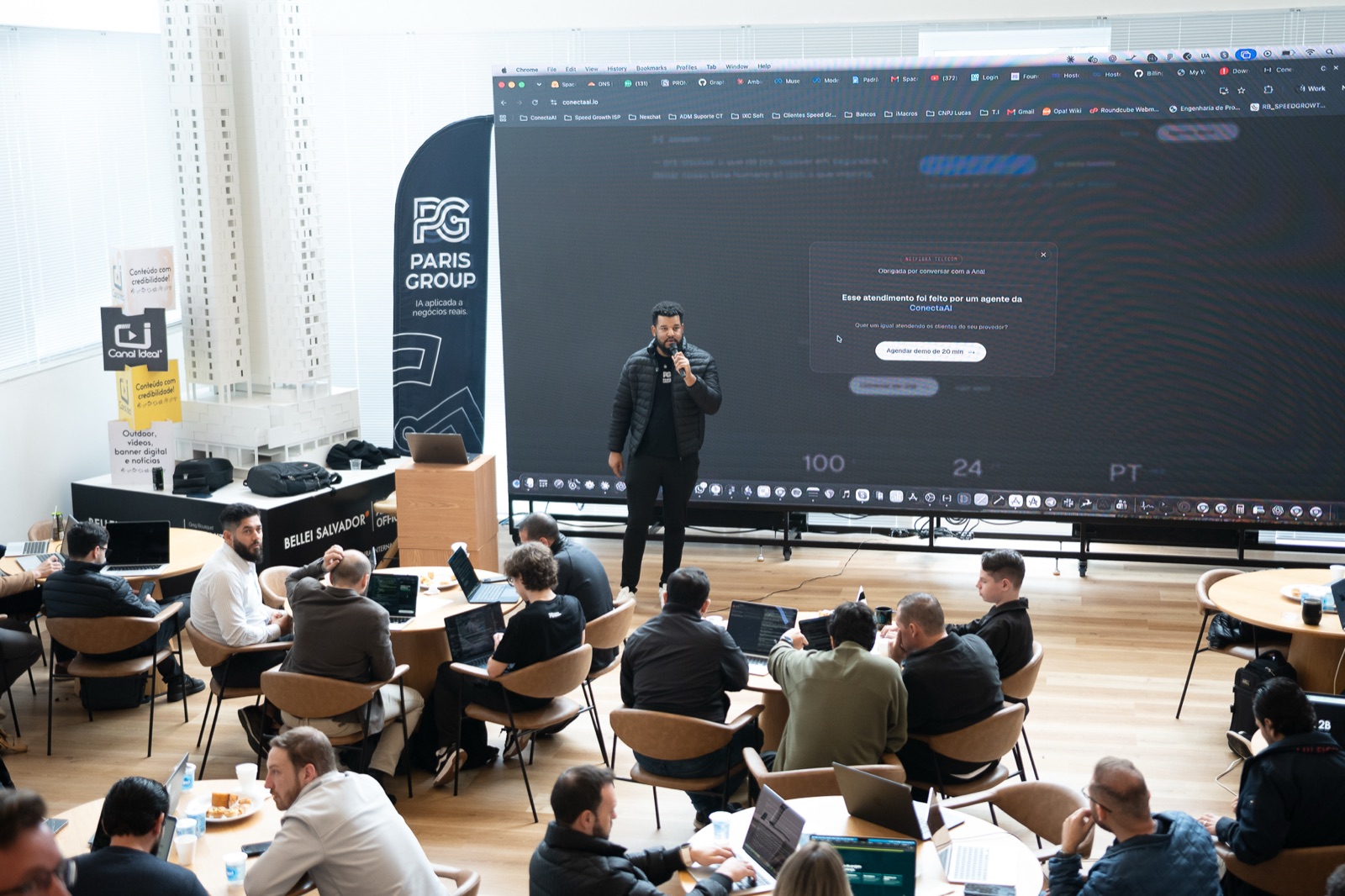
The call was answered live by an AI agent, in front of the room. The caller spoke the way you speak to any human agent — no menu, no "press 1", no slowing down for the machine.
What surprised the room wasn't the voice sounding natural. Natural voice is a commodity now: anyone can build a pretty demo with good TTS. What changes the game is the agent doing something while it talks — querying the provider's system, confirming subscriber data, executing the action and answering with real information instead of generic text.
That's the difference between a demo and a product, and it's the same thesis I repeat across this site: support that doesn't stop at 6pm. The call the room heard wasn't a recording — it was the same product that serves real customers.
Teaching improves the product
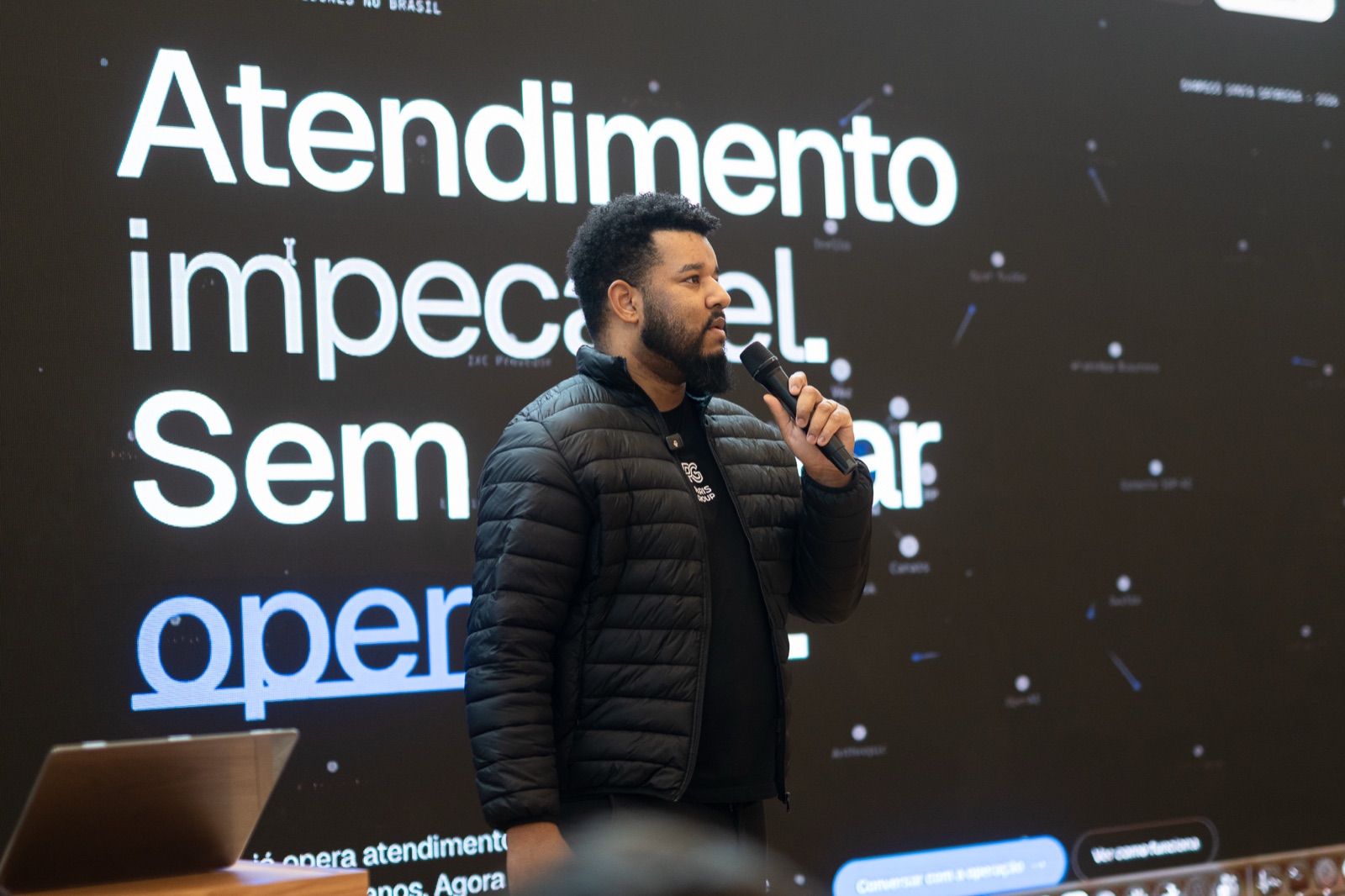
There's a side effect of mentoring that nobody mentions: you find out where your own product is confusing.
When nine people from different contexts ask about the same thing, the repeated question isn't their ignorance — it's a hole in your explanation, or in your product. I wrote down more than one of those over those three days, and some became tasks.
That's why I said yes to mentoring. It isn't a marketing move: it's the fastest way I know to test whether what I build holds up outside my own head.
What I'd bring to any AI immersion
If you're going to one — Paris Group's or any other — bring this:
- A problem, not a curiosity. "I want to understand AI" produces good conversation and zero delivery. "I lose sales because I'm slow to answer on WhatsApp" produces a product.
- Access. System login, API key, the contact who can approve things. Half the time lost at an immersion is spent waiting for someone to grant access.
- Willingness to cut scope. You'll arrive with a big idea. You'll leave with a piece of it working. That piece is worth more than the whole idea on paper.
- Someone beside you. Not for the technology — for the decisions. Most of a mentor's value is in saying "that part doesn't need to exist".
Closing
Three days, nine founders, nine projects delivered. One AI phone call that made a whole room stop to listen.
If one sentence sums up what I saw there, it's the same one that opens my site: a product that's live beats a beautiful slide. The immersion works because it doesn't let anyone leave with only the slide.
If you have a bottleneck that looks like "something AI should solve" and you want to know whether it can actually go live — get in touch. I'll tell you when the answer is no, too.